Vision Audit+ for AVEVA PI Vision

Make every critical PI Vision display traceable and recoverable

Track display changes, capture the reason behind them, restore previous versions, recover deleted displays, and support validation workflows—without moving users out of PI Vision.

  • Display change history
  • Rollback and recovery
  • Validation states
Illustration of PI Vision display history, comparison, validation, and rollback workflows

The governance gap

When a critical display changes, can you prove what happened?

PI Vision makes dashboards easy to build and adapt. For operationally critical or validation-sensitive displays, that flexibility creates a harder question: how do you understand a change, recover from it, and keep trusted content under control?

01

Changes without context

A display may look different, but the reason, author, timestamp, and exact objects changed can be difficult to reconstruct later.

02

Recovery becomes rework

Unwanted edits and deleted displays can force teams to rebuild layouts manually or search for an uncertain backup.

03

Trusted displays keep moving

Without a clear Draft, In Review, and Validated lifecycle, it is harder to distinguish work in progress from approved operational content.

The Vision Audit+ approach

Keep display history, change reasons, version comparison, rollback, deleted-display recovery, validation states, and notifications in one PI Vision-centered workflow.

The outcome

More confidence in every important PI Vision display

Know what changed

See the author, time, event, comments, and affected display objects in a reviewable history.

Recover without rebuilding

Revert to a previous version or restore a deleted display when something goes wrong.

Protect trusted content

Move displays through Draft, In Review, and Validated states and apply stronger control to governed displays.

Core capabilities

Govern the display lifecycle—not just the final screen

Vision Audit+ adds the controls PI System teams need around change review, recovery, validation, and communication while keeping the experience connected to AVEVA PI Vision.

Traceability

Automatic display history

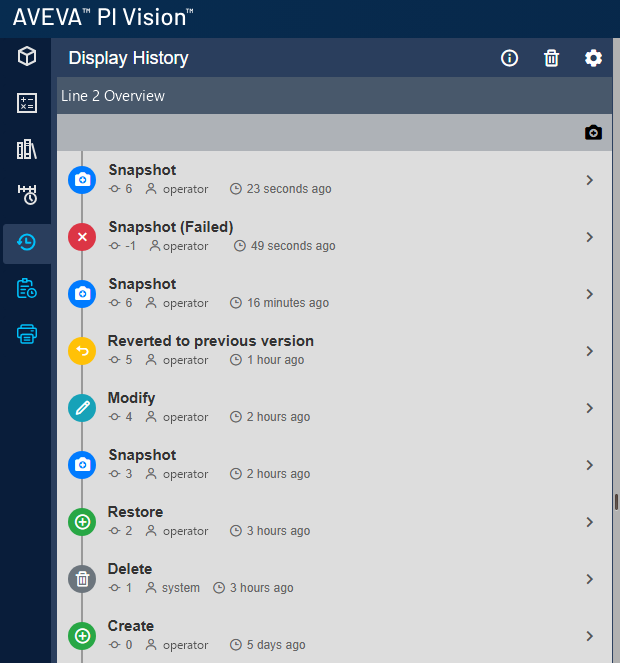
Capture create, modify, snapshot, delete, restore, and revert events with user and timestamp context. Review individual event details and see which display objects changed.

Recovery

Rollback and deleted-display recovery

Return a display to a known earlier version instead of reconstructing it manually. Restore deleted displays together with their associated thumbnail and identities.

Validation workflow

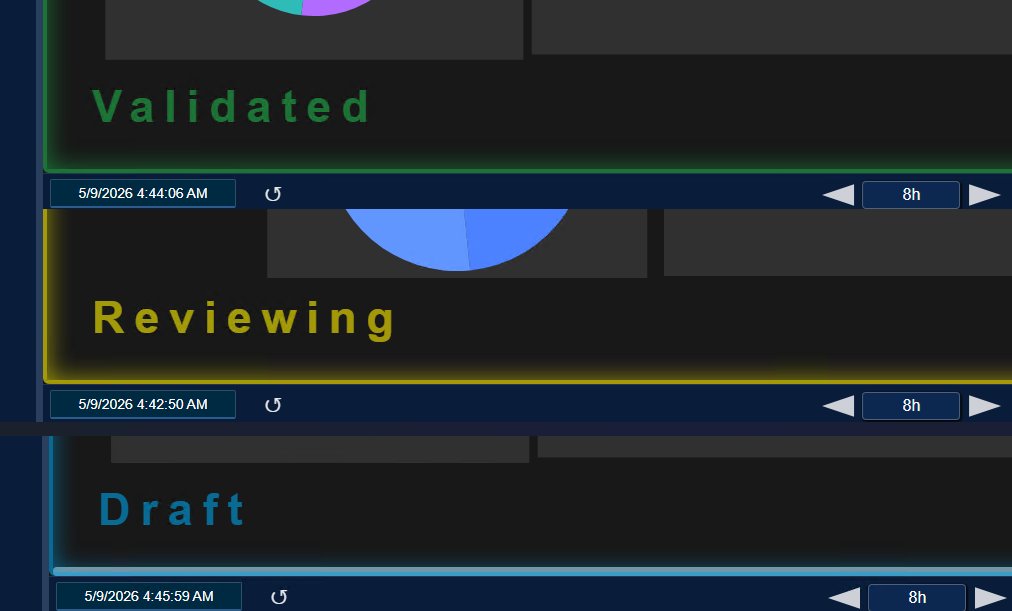
Draft, In Review, and Validated states

Move governed displays through a visible lifecycle and identify their current state at a glance. Hardened locking helps protect displays that should not be changed casually.

Accountability

Required reasons and event comments

Administrators can require a reason before a display is saved. Comments can add operational or quality context to supported events so the history explains why a change occurred.

Awareness

Change notifications

Notify configured recipients when important display activity occurs. Give administrators and stakeholders earlier visibility into modifications and deletions.

Oversight

Validation-state statistics and telemetry

See how many displays are Draft, In Review, or Validated and use Change History telemetry to monitor product performance in the environment.

How it works

One governance workflow inside PI Vision

Vision Audit+ records display activity automatically and gives authorized teams practical tools to investigate, recover, and validate the dashboards their operation depends on.

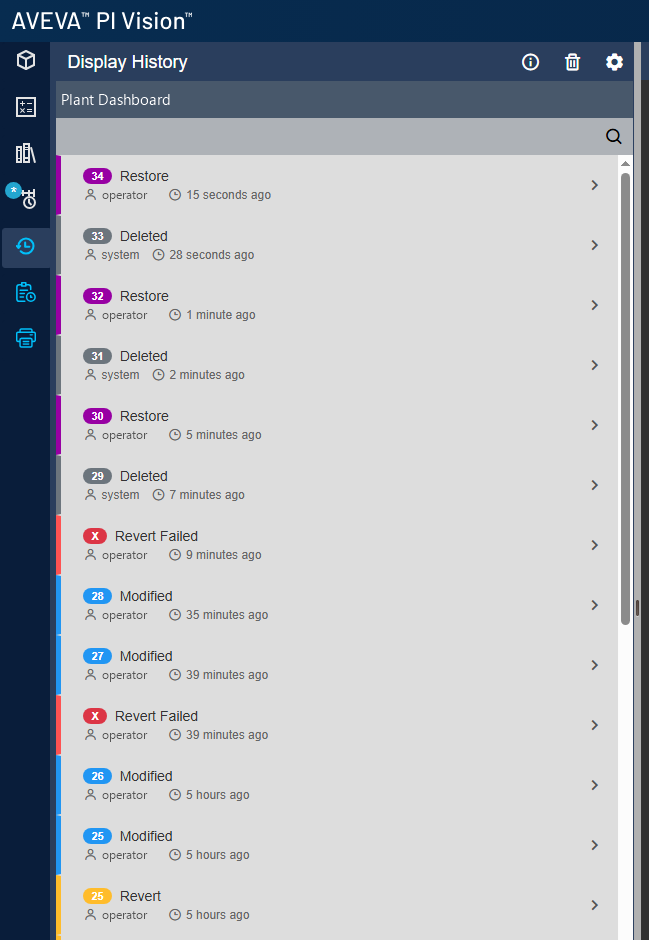
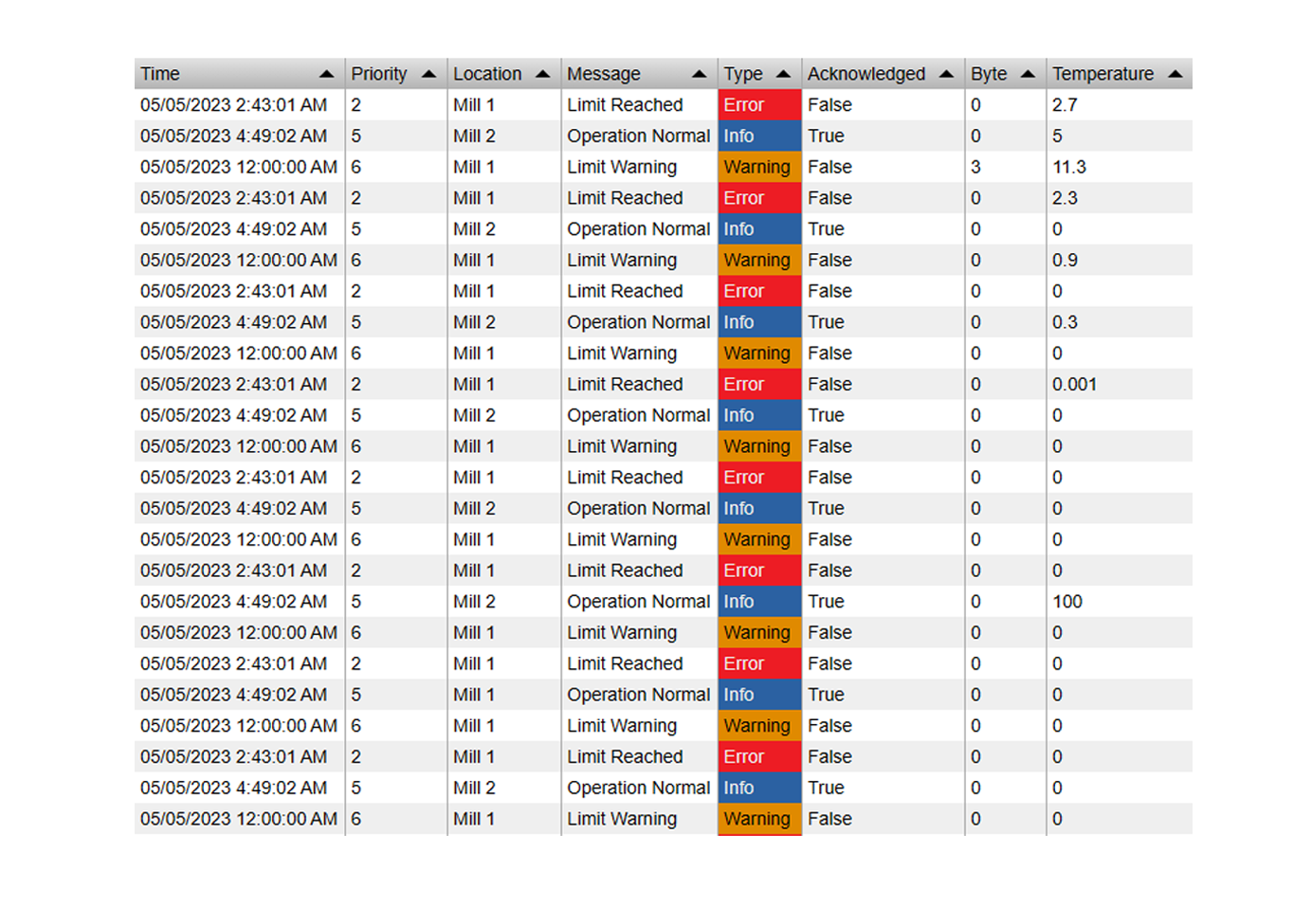
Vision Audit+ display history showing create, delete, restore, modify, snapshot, and revert events

01 / Record

Build a chronological history automatically.

Every supported display event becomes part of a timeline with its user, timestamp, event type, and related details. Teams gain a consistent place to investigate how a display reached its current state.

  • Review create, modify, delete, restore, snapshot, and revert events.
  • Open an event to inspect its details.
  • Use comments and save reasons to retain business context.
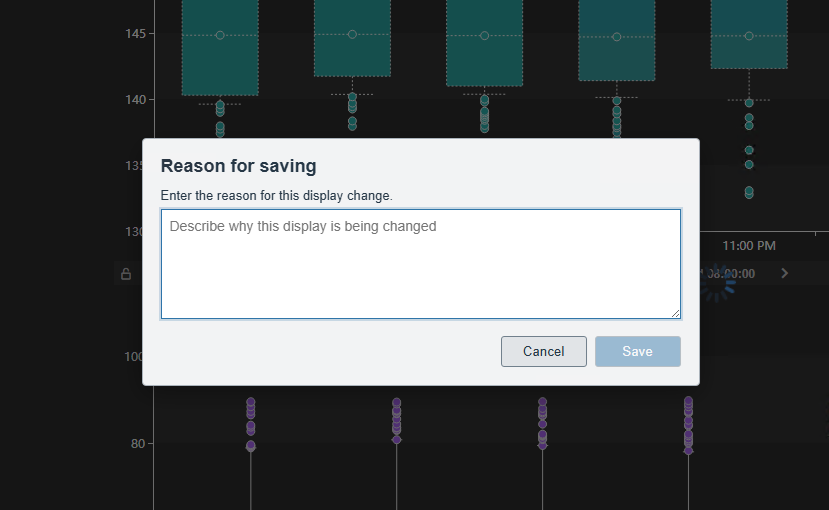
Vision Audit+ dialog requiring a reason before a PI Vision display is saved

02 / Explain

Capture why the display was changed.

When the option is enabled, Vision Audit+ asks the user for a reason before completing the save. The explanation remains with the history so reviewers are not left to infer intent from a visual difference.

  • Require a stated reason for display saves.
  • Add comments to supported display events.
  • Log when validation workflows are enabled or disabled.
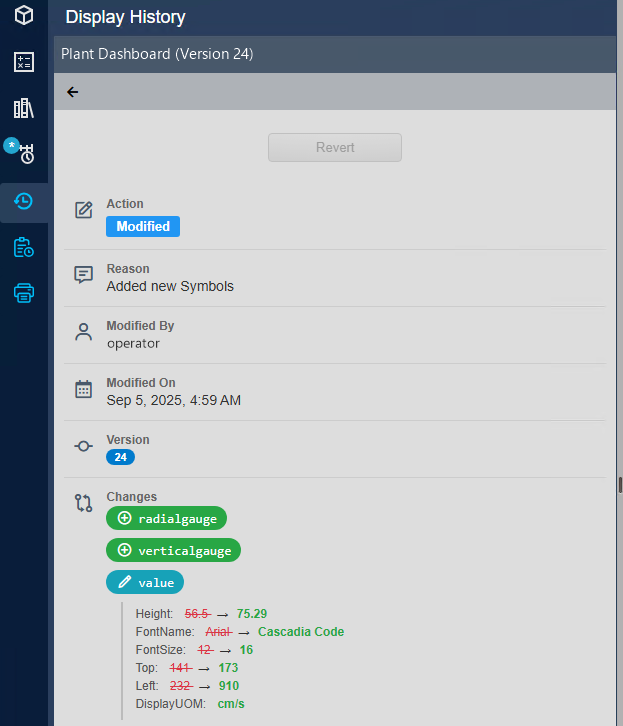
Vision Audit+ display recovery interface inside AVEVA PI Vision

03 / Recover

Restore the right version instead of rebuilding it.

Review earlier states, return a display to a selected version, or recover a deleted display. The recovery workflow helps teams respond quickly to mistakes, unwanted edits, and accidental deletion.

  • Roll back to a previous display version.
  • Recover deleted displays from the history.
  • Restore associated thumbnail and identity information.
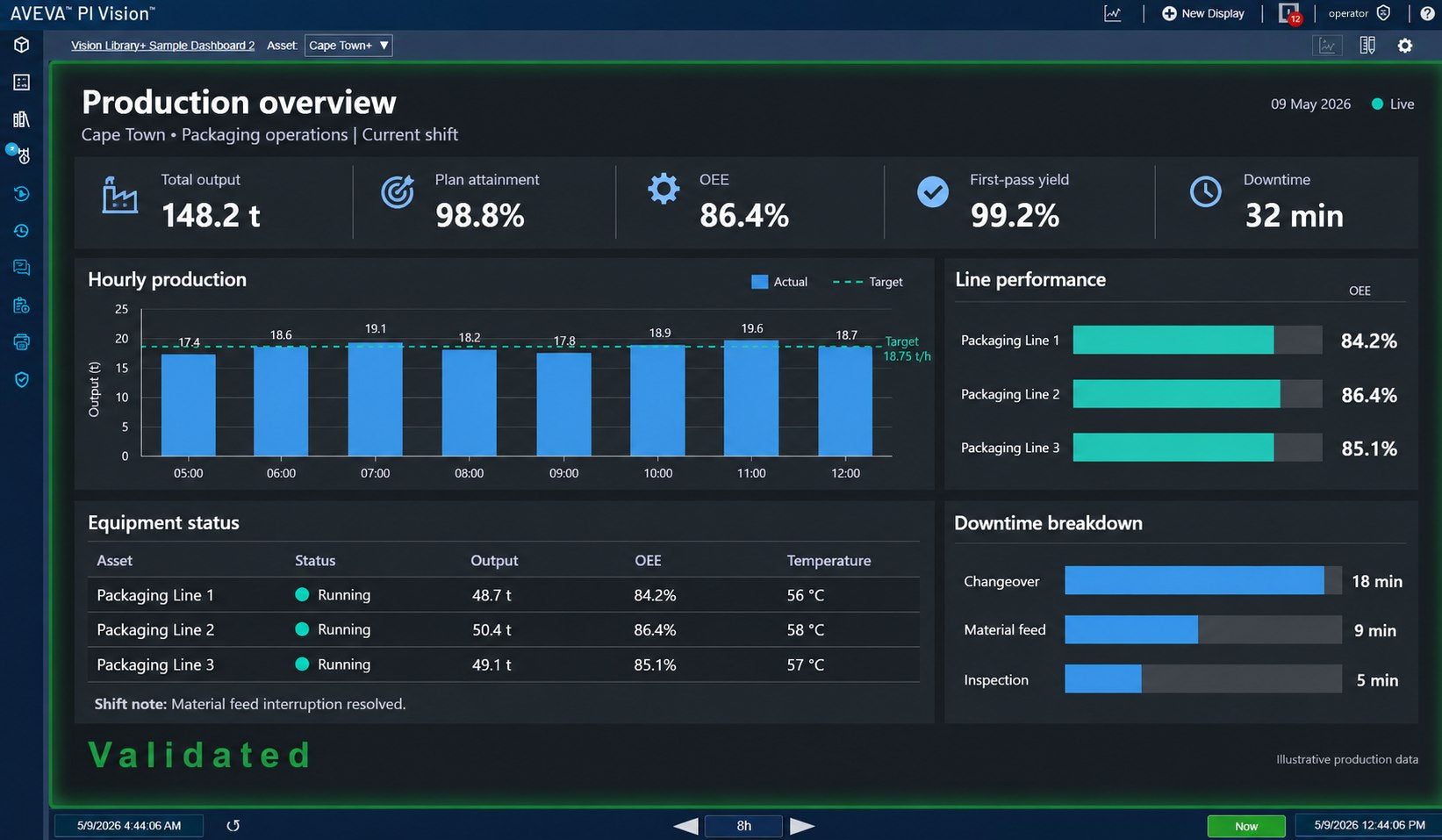
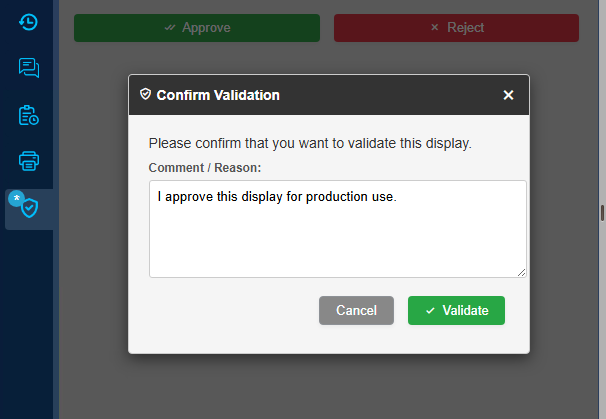
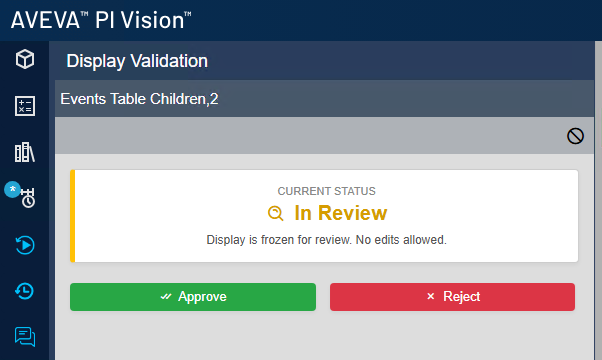
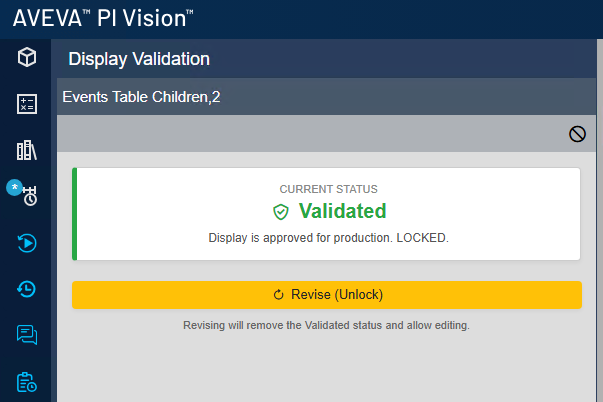
Validated PI Vision dashboard protected by the Vision Audit+ validation workflow

04 / Validate

Make trusted and in-progress displays easy to distinguish.

Use Draft, In Review, and Validated states to communicate where a governed display stands. Visible state cues and hardened locking help teams protect content that has completed review.

  • Move displays through a defined state lifecycle.
  • Show the current state directly in the PI Vision experience.
  • Return the display to Draft automatically when validation is disabled.

Built for the PI Vision environment

Add governance without replacing the dashboards your teams already use

Vision Audit+ extends the PI Vision experience rather than introducing a separate external governance portal. Users review history, recover displays, and work with validation states in the same environment where the displays are used.

01

Familiar user experience

History, recovery, validation cues, and notifications stay connected to the PI Vision workflow.

02

Customer-environment deployment

Deploy alongside PI Vision and PI Web API in the environment your PI System team already operates.

03

Continuity-oriented options

Current releases support concurrent Vision Audit+ instances for failover-oriented deployment designs.

04

Practical evaluation

Use a trial to test display history, rollback, recovery, validation, and notification behavior with your own displays.

Vision Audit+ FAQ

Questions about PI Vision display auditing and recovery?

Practical answers about change history, rollback, validation workflows, deployment, and trials.

What does Vision Audit+ track in AVEVA PI Vision?

Vision Audit+ records supported display events such as creation, modification, snapshots, deletion, restoration, and rollback. The history includes the responsible user, timestamp, event type, and event details. For changes, teams can inspect which display objects were affected and retain comments or save reasons for additional context.

Can Vision Audit+ show exactly what changed in a display?

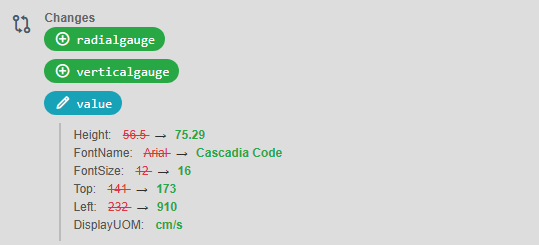
Yes. The display history can show affected symbols and detailed changes for supported display objects. This helps reviewers move beyond a simple “display modified” entry and understand which parts of the PI Vision display were added, removed, or changed.

Can users be required to enter a reason before saving?

Yes. Administrators can enable a setting that presents a dialog before a display save and requires the user to enter a reason. The reason is retained with the display history, giving teams a clearer record of why the change was made.

Can Vision Audit+ restore an earlier display version?

Yes. Authorized users can select an earlier version from the history and revert the display to that state. This provides a practical recovery path after an unwanted edit or configuration problem and avoids manually reconstructing the previous layout.

Can deleted PI Vision displays be recovered?

Yes. Vision Audit+ can restore deleted displays from the recovery workflow. Current releases also restore associated thumbnail and identity information, helping the recovered display retain more of its original context.

How does the validation workflow work?

Governed displays can move through Draft, In Review, and Validated states. The current state is visible in the PI Vision experience, and locking behavior helps protect content that has completed review. Enabling or disabling the validation workflow is logged; when validation is disabled, the display returns to Draft.

Does Vision Audit+ make a PI System automatically compliant?

No software feature alone makes an environment compliant. Vision Audit+ provides technical controls—such as display history, change reasons, validation states, locking, recovery, and notifications—that can support your organization’s governance, validation, and quality procedures. Your organization remains responsible for its processes, configuration, validation, and regulatory assessment.

Can teams receive notifications when displays change?

Yes. Vision Audit+ can send configured email notifications for important display activity, including modifications and deletions. Notifications give administrators and stakeholders earlier visibility while the detailed history remains available for investigation.

Where is Vision Audit+ deployed?

Vision Audit+ is deployed in the customer environment alongside AVEVA PI Vision and PI Web API. Its user-facing tools extend the familiar PI Vision experience. Current releases also support concurrent instances for failover-oriented deployment designs; the installation guide should be used when planning the final architecture.

Is a Vision Audit+ trial available?

Yes. You can request a trial to evaluate Vision Audit+ with your own PI Vision displays and operating procedures. A trial is the best way to test history capture, required save reasons, rollback, deleted-display recovery, validation states, notifications, and deployment fit in your environment.

Take the next step

See how Vision Audit+ would govern your PI Vision displays

Walk through your display-change, recovery, and validation requirements with Software Athlete—or request a trial and evaluate the workflow in your own PI System environment.