Alarm Sound+ for AVEVA PI Vision

PI Vision alarm sound with acknowledge and mute

Add an audible alarm to your PI Vision display. Alarm Sound+ watches one value, changes colour and plays a sound when it meets your alarm condition, and lets operators mute it with one click while the visual alarm stays until the value is back to normal.

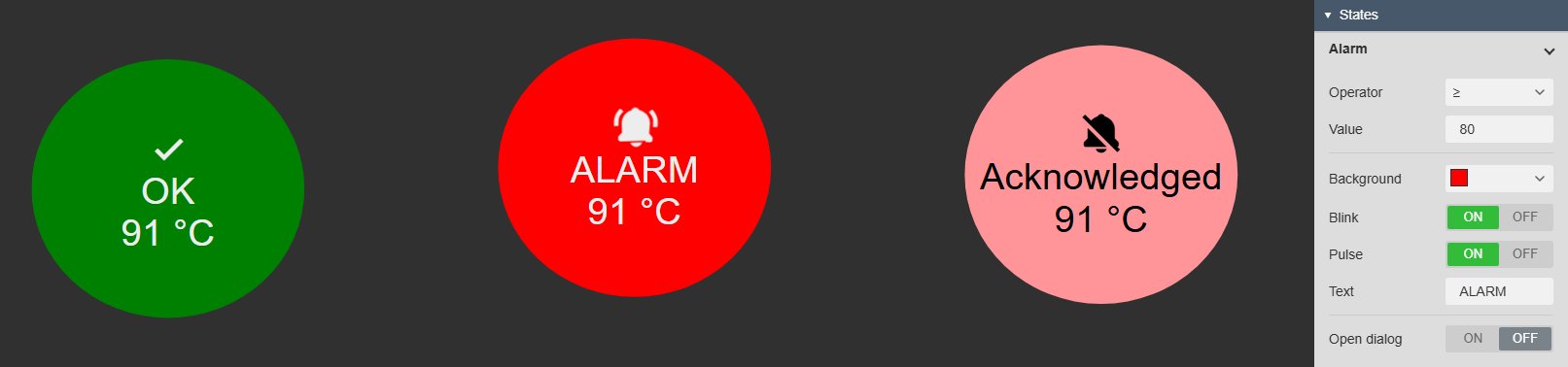
Three Alarm Sound+ symbols in PI Vision on the same temperature value of 91 °C: green OK with a check mark, red ALARM with a ringing bell and pink Acknowledged with a muted bell, next to the Alarm settings of the configuration pane with Operator greater than or equal, Value 80, Background, Blink, Pulse, Text and Open dialog
Alarm Sound+ in PI Vision: OK, ALARM and Acknowledged on one value, next to the alarm condition in the configuration pane. Demo data. Select the image to enlarge.

PI Vision alarm conditions and alarm states

Bind Alarm Sound+ to one PI point or AF attribute and define what counts as an alarm. The symbol shows whether the value is normal, in alarm or already acknowledged.

Alarm conditions with a return band

Set when the alarm starts and, separately, when it counts as normal again, so a value that hovers around the limit does not toggle the alarm.

  • Numeric values: a threshold with =, ≠, >, ≥, < or ≤.
  • A separate Default condition decides when the alarm returns to normal, for example alarm at ≥ 80 and normal below 75.
  • Enumeration sets: pick the alarm state from the list.
  • Your own text and background colour for the alarm and normal states.
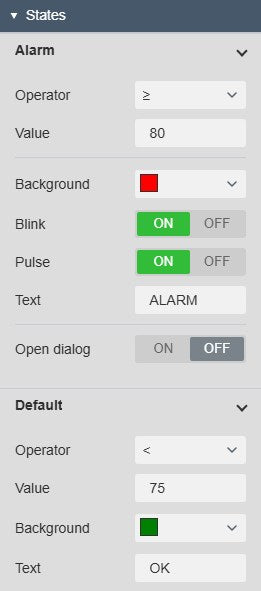
Alarm Sound+ States settings: the Alarm group with Operator greater than or equal, Value 80, a red Background, Blink and Pulse on, Text ALARM and Open dialog off, followed by the Default group with Operator less than, Value 75, a green Background and Text OK
The alarm condition (≥ 80) and the return-to-normal condition (< 75). Select the image to enlarge.

True/False alarms and dynamic limits

Alarm on a trip or status signal, or on a limit check that compares a value with its own limit instead of a fixed number.

  • Boolean values: alarm on True or on False.
  • Write a PI Vision calculation with a true or false result, such as a value above its Hi limit trait, and use it as the data source.
  • The alarm starts whenever the result matches.
  • Each asset keeps its own limits in AF.
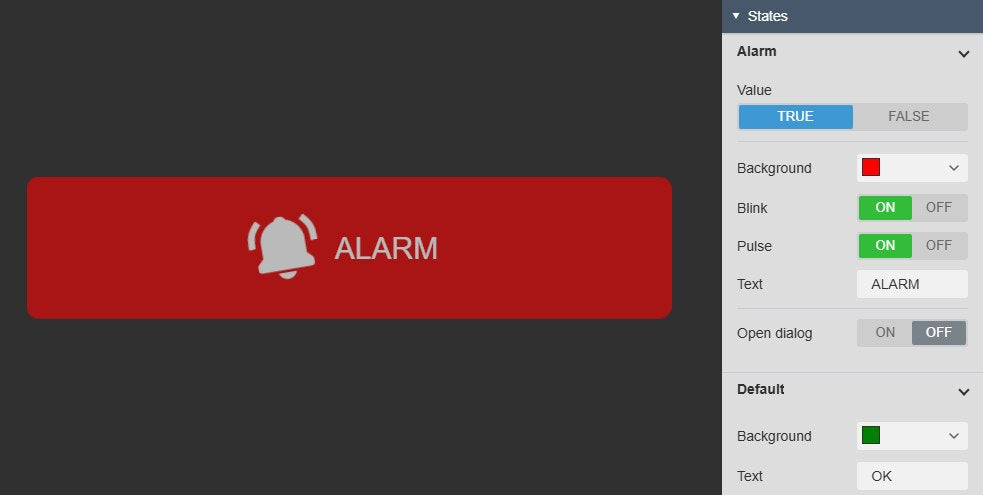
A wide Alarm Sound+ symbol in the blinking red ALARM state with a ringing bell, bound to a Boolean demo value, next to the Alarm settings with Value TRUE selected and the Default group with only Background and Text
A Boolean value in alarm on True, the result type of a limit-check calculation. Demo data. Select the image to enlarge.

Alarm sound and acknowledgement in PI Vision

Make the alarm heard on an attended display, and let the operator silence it without hiding that the condition is still active.

Built-in and custom alarm sounds

Choose a sound that fits the urgency of the alarm, or use your site’s own alarm tone.

  • Seven built-in sounds: Slow, Fast, Classic, Critical, Clock, High Pitch and Security.
  • Custom .mp3 or .wav files that an administrator copies to the PI Vision sounds folder.
  • A Preview button in the pane to check that the browser loads and plays the sound.
  • The sound repeats while the alarm is active and unacknowledged.
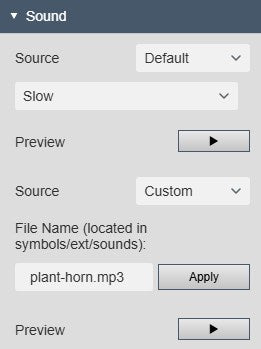
Alarm Sound+ Sound settings: Source Default with the built-in sound Slow and the Preview play button, and below it Source Custom with the file name box, located in symbols/ext/sounds, an example file name and the Apply button
Built-in and custom sound settings with the Preview button. Select the image to enlarge.

Click to acknowledge and mute

Operators click the symbol to acknowledge the alarm. The sound stops, and the symbol keeps showing the alarm until the value is back to normal.

  • A separate Acknowledged colour and text, with a muted bell.
  • The symbol returns to its Default state once the value meets the Default condition.
  • Switch Acknowledge off when an alarm must not be muted from the display.
  • The acknowledgement is kept in the browser for that display and symbol.
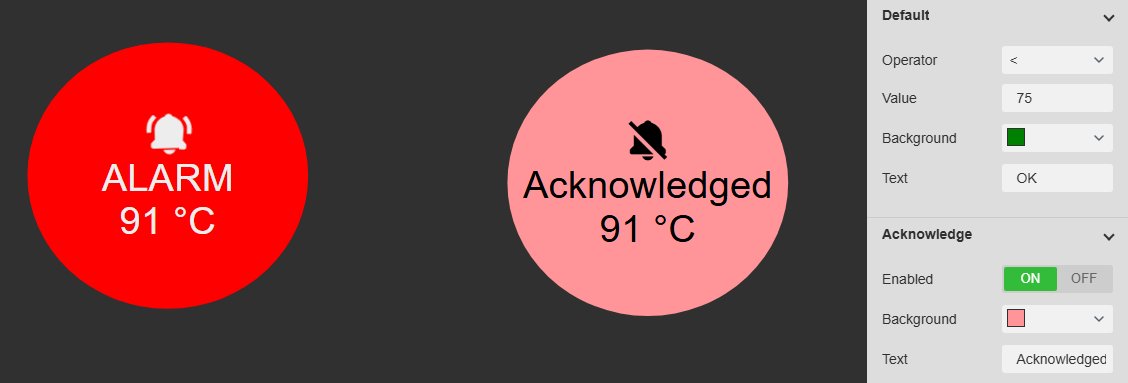
Two Alarm Sound+ symbols on the same value of 91 °C, one in the red ALARM state with a ringing bell and one in the pink Acknowledged state with a muted bell, next to the Default settings (Operator less than, Value 75) and the Acknowledge settings with Enabled, Background and Text
An active alarm and an acknowledged one, with the Default and Acknowledge settings. Demo data. Select the image to enlarge.

Alarm indicator styles, detail dialogs and live data

Fit the alarm into a process graphic or an overview, take operators to the right detail display, and keep the alarm to live data.

Round or square, with icon, text and value

Use a compact indicator on a process graphic or a labelled alarm button on an overview.

  • Round or square shape, with a bell or check-mark icon in an adjustable size.
  • Your own text for each state, and the live value with units.
  • Number format, decimal places and display unit; typed limits are read in the displayed unit.
  • A tooltip with the data source label, timestamp, value and units.
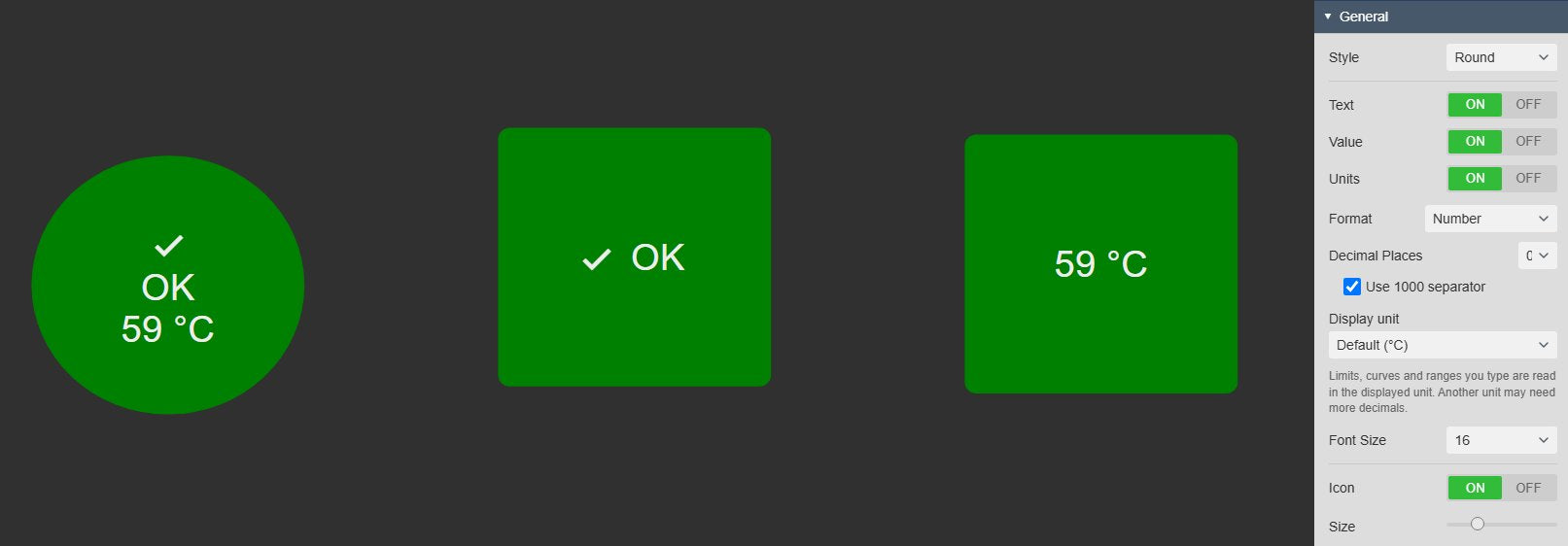
Three Alarm Sound+ symbols in the green OK state: round with check mark, text and value, square with check mark and text, and square with only the value 59 °C, next to the General settings with Style, Text, Value, Units, Format, Decimal Places, Display unit, Font Size, Icon and Size
Round and square alarm indicators with icon, text and value, and the General settings. Demo data. Select the image to enlarge.

Open a detail display when the alarm starts

Bring up the display operators need for the response as soon as the alarm begins.

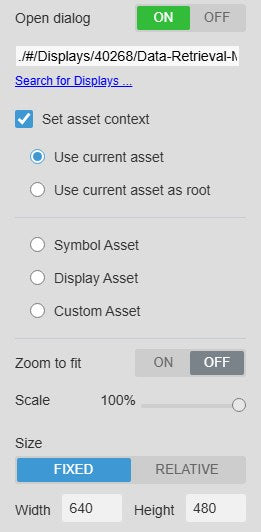
  • A PI Vision display opens in a dialog when the alarm starts.
  • Search for the display or enter its link.
  • Pass the current asset, the symbol’s asset, the display’s asset or a custom asset as context.
  • Fixed or relative dialog size, with scale and zoom to fit.
Alarm Sound+ Open dialog settings: Open dialog on, a display link, Search for Displays, Set asset context with Use current asset, Use current asset as root, Symbol Asset, Display Asset and Custom Asset, Zoom to fit, Scale 100 percent and Size Fixed with width 640 and height 480
The Open dialog settings with the display link, asset context and dialog size. Select the image to enlarge.

No alarm sound for old or historical data

Alarm only on current values, and tell operators when a value is out of date.

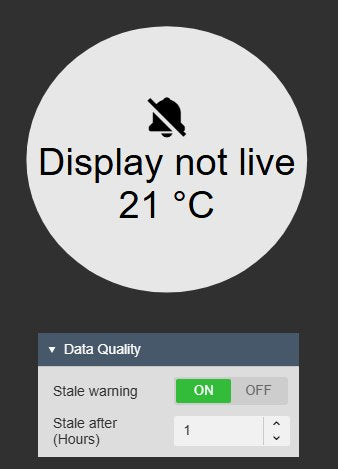
  • A stale warning when the value is older than the threshold you set in hours.
  • No sound while the value is stale.
  • The alarm is evaluated only while the display shows live data; otherwise the symbol shows Display not live.
  • Every symbol stays silent while the display looks at a past time range.
An Alarm Sound+ symbol in grey with a muted bell and the text Display not live and 21 °C, shown when the display time range is not live, above the Data Quality settings with Stale warning on and Stale after 1 hour
Display not live on a past or future time range, and the stale warning settings. Demo data. Select the image to enlarge.

PI Vision alarm sound examples

Four common ways teams use Alarm Sound+ on their displays.

Machine trip

Data
A Boolean trip status of a compressor or pump
Settings
Alarm on True, Critical sound, Blink on, Acknowledge on
Shows
An audible trip alarm that operators mute with one click while the symbol stays red until the reset

Level against its AF limit

Data
A PI Vision calculation that compares a tank level with its Hi limit trait
Settings
Alarm on True, Fast sound, text High level
Shows
A high-level alarm that follows each tank’s own limit

Temperature with a return band

Data
A temperature attribute of a reactor or furnace
Settings
Alarm at ≥ 80, Default below 75, value and units shown
Shows
An alarm that does not toggle while the temperature hovers around the limit

Alarm with the response display

Data
A temperature attribute of an asset with a detail display
Settings
Alarm threshold, Open dialog with the detail display and the symbol’s asset as context
Shows
The detail display of the right asset opens as soon as the alarm starts

Alarm Sound+ FAQ

Questions we are asked most often. Read the Alarm Sound+ documentation or ask a technical question.

When should we use Alarm Sound+ instead of the sound in Alarm Table+?

Use Alarm Sound+ for one important value on a process display: one data source, a visible alarm indicator that operators click to mute, alarm conditions on numbers or True/False values, custom sound files and an optional detail display that opens when the alarm starts. Use Alarm Table+ when many assets and attributes should be watched in one list: it creates alarm rows from AF attribute conditions with severities and messages, plays one of its seven built-in sounds from the severity you choose, acknowledges per row and shows alarm history. Both play only while the display is open in a browser, and both keep acknowledgements in that browser.

How does acknowledgement work?

When the alarm starts, the symbol changes to its Alarm colour and plays the sound. Clicking the symbol acknowledges the alarm: the sound stops and the symbol shows the Acknowledged state until the value meets the Default condition, then it goes back to Default. The acknowledgement is kept in the browser for that display and symbol. It is not written to PI Server or AF, so another workstation has its own state, and it is not an audit trail. Switch Acknowledge off if the sound must not be muted from the display.

Can the alarm limit come from AF?

Yes, through a PI Vision calculation. Write an expression with a true or false result, for example a value compared with its Hi limit trait, use the calculation as the data source of an Alarm Sound+ symbol and set the alarm to True. For fixed limits, enter the operator and threshold in the States settings.

When does Alarm Sound+ not play a sound?

The sound plays only while the display is open in an active browser session with audio allowed and the workstation volume up. It does not play for stale values or when the display does not show live data, and it stops when the alarm is acknowledged or the value returns to normal. Alarm Sound+ is a display aid for attended screens, not a replacement for your alarm or safety systems.

What do we need to run it?

PI Vision 2021 or later with PI Web API, and PI AF Server 2018 SP2 or later for AF attributes. For the sounds, the .mp3 and .wav file extensions must be allowed in IIS request filtering on the PI Vision server; the Help section of the configuration pane shows the web.config entries. Custom sound files are copied to the PI Vision sounds folder by an administrator. Alarm Sound+ reads with each user’s existing PI permissions and writes nothing to the PI System.

How do we get Alarm Sound+?

Alarm Sound+ is part of Vision Library+, together with the other Vision Library+ symbols. Request a trial to test it in your own PI Vision environment.

Try Alarm Sound+ in your PI Vision

Alarm Sound+ is included in Vision Library+, the PI Vision custom symbol library from Software Athlete. Test it on your own displays and data.