Vision Library+ / Guide
Getting started
Vision Library+ adds symbols and toolbar tools to the PI Vision display editor. Use this chapter to choose a symbol, add it to a display, and find the settings that affect operators.
Overview
Vision Library+ adds symbols and toolbar tools to the PI Vision display editor. Use this chapter to choose a symbol, add it to a display, and find the settings that affect operators.
Demo videos are available from the Software Athlete website.
Choose a symbol
Start with the task you need to support:
| Task | Start with | Typical outcome |
|---|---|---|
| Enter or correct data | Manual Input Form+, Manual Input Table+, Manual Data Entry+, or Quick Input+ | Operators write validated values from a display. |
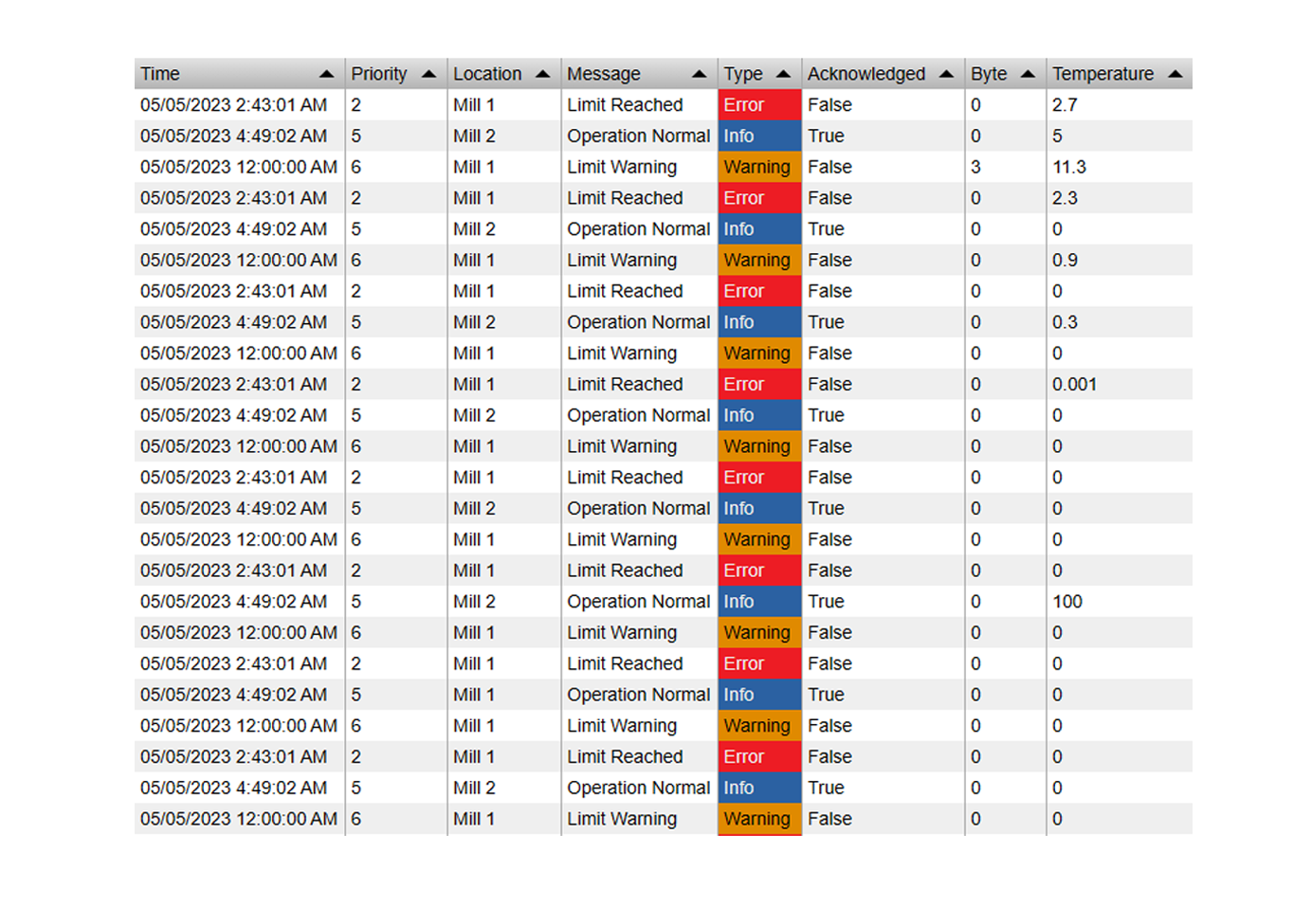
| Monitor rows or records | Alarm Table+, Events Table+, Time Series Table+, Asset Comparison Table+, or AF Table+ | Operators sort, filter, acknowledge, edit, or export structured data. |
| Analyze trends or distributions | Combo Chart+, Event Comparison Chart+, Period Comparison Chart+, Histogram+, Box Plot+, FFT+, or Heatmap+ | Display designers compare time-series or event behavior. |
| Show a current state | Value+, Linear Gauge+, Radial Gauge+, Alarm Sound+, or Asset Treemap+ | Operators recognize the current value, range, or status quickly. |
| Change context or navigate | Asset Select+, DateTime Picker+, Navigation Menu+, Navigation Button+, or Web View+ | Operators change asset or time context and move between related information. |
The Symbols chapter lists all symbols by task and alphabetically.
Add a symbol
- Open a PI Vision display in edit mode.
- Find the required PI Point, AF attribute, AF asset, or event-frame context.
- Select the Vision Library+ symbol in the symbol gallery.
- Drag the required data or context onto the display.
- Right-click the symbol and open its configuration pane.
- Configure the minimum settings described in the symbol article and verify the result.
Some controls, including event-analytics symbols and navigation controls, begin with a search or destination rather than a conventional data source. Follow the Before you begin and Add and set up the symbol sections in the relevant article.
Separate setup from operation
Each symbol article uses the same reading order:
- When to use it helps you choose the correct symbol.
- Before you begin lists required data, permissions, and product settings.
- Add and set up the symbol gives the shortest path to a working result.
- Use the symbol describes operator actions and their effect.
- Configure the symbol explains the available settings.
- Troubleshooting and limitations identifies common causes and fixed constraints.
Pay particular attention to bold Important statements in data-entry and event-editing articles. Those actions can write, replace, or delete PI System data.
Use display time and asset context
Most visualization symbols follow the PI Vision display time range. A symbol can instead use a custom range, duration, or offset when its configuration supports independent time behavior.
Supported charts and tables can also expose the shared Time Bar, which lets operators change one symbol's range without changing display time.
Asset-relative displays use AF context. Asset Select+, Navigation Menu+, and Navigation Button+ can change or pass that context when configured to do so. Confirm the destination display and context behavior before publishing the display for operators.
Tools
Vision Library+ also includes display-level toolbar tools. Playback replays a historical time range as an animated sequence so operators can review how a display changed during a past event.